Planned care · Inglewood homes
HVAC Maintenance and Tune-Ups for Inglewood Homes
A tune-up is planned care for a system that's working: a technician cleans, tests and adjusts it before the season it has to work hardest. This page covers what a checkup usually includes, when to book one, and what to do if it turns up a problem.
No obligation to hire.
Maintenance or repair?
Maintenance
The system works, and you want it to keep working
Planned, before the season. The technician cleans and checks the equipment and looks for early signs of wear.
- You haven't had the system checked in a year or more.
- Summer or winter is coming and you'd rather not find out then.
- You've just moved in and don't know the system's history.
Repair
Something is already wrong
Warm air, no heat, water on the floor, a new noise or a system that won't start. That needs a diagnosis, not a tune-up.
- AC repair: cooling problems and what they can mean.
- Furnace and heater repair: heating problems, with gas safety first.
The checkup
What a tune-up usually covers
Checklists vary by contractor and equipment, so ask what's included. A typical checkup, based on ENERGY STAR's maintenance checklist, looks like this:
Every system
General checks
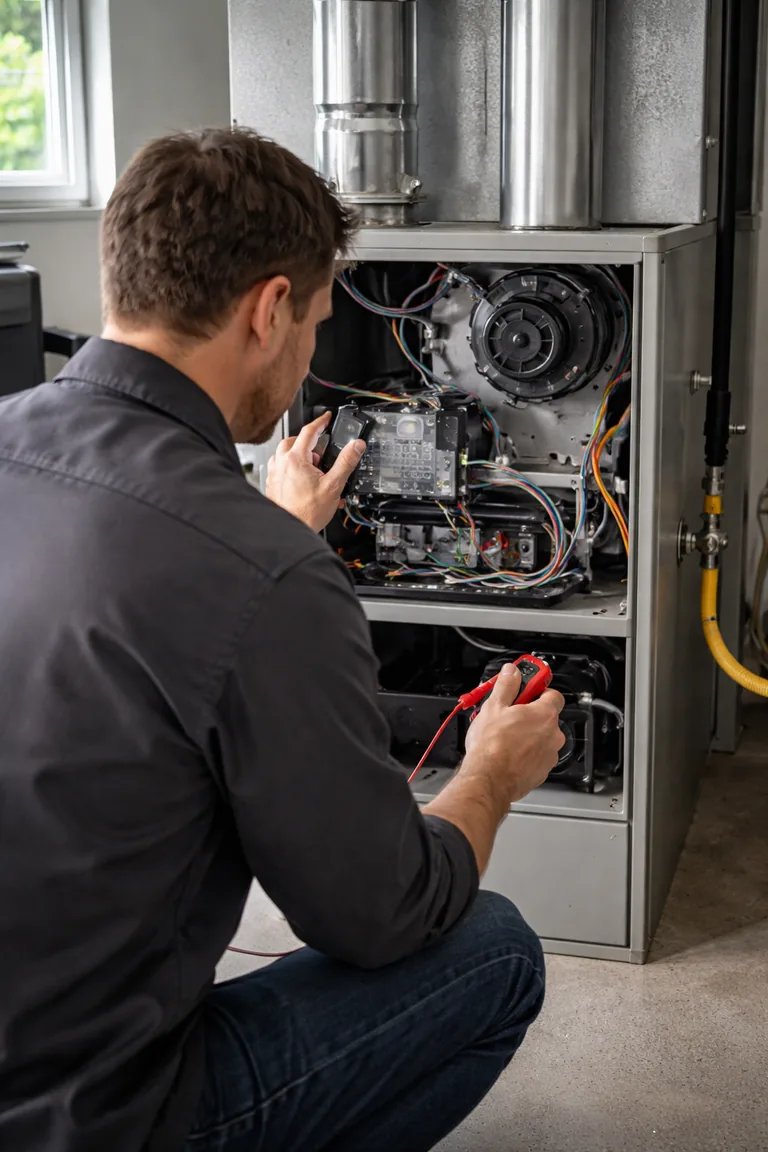
Thermostat settings and operation, tightened electrical connections, motor readings, lubrication of moving parts where needed, the condensate drain, and the system's controls and safety operation.
Cooling
Air conditioner
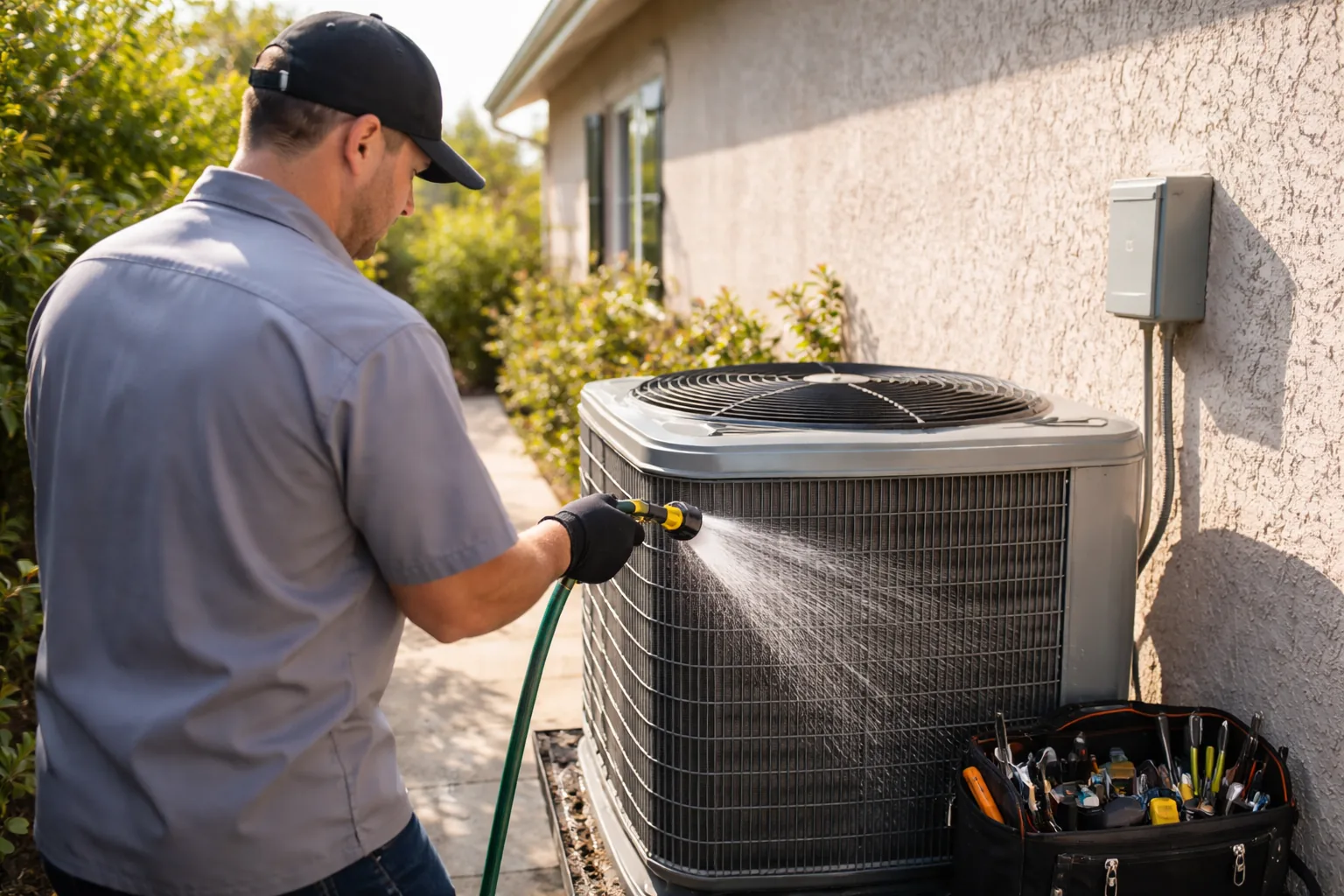
Cleaning the indoor and outdoor coils, checking the refrigerant level, and cleaning and adjusting the blower so air moves through the system properly.
Heating
Furnace or wall heater
Gas connections and pressure, burner operation and combustion, the heat exchanger, and the flue or vent that carries combustion gases outside.
Timing
When to book
ENERGY STAR suggests checking the cooling system in spring and the heating system in fall, before contractors get busy with the first heat wave or cold snap.
For gas heating in particular, the CDC recommends having it serviced by a qualified technician every year.
Between visits
Check the air filter monthly and replace it when it's dirty; a clogged filter restricts airflow for both heating and cooling.
Keep the outdoor unit clear of leaves and stored items, and keep supply vents and return grilles unblocked.
Leave coil cleaning, electrical parts, refrigerant and anything gas-related to a technician.
If something turns up
When a tune-up becomes a repair
Sometimes a checkup finds a worn part or a fault. That's part of its purpose, but it changes the conversation. Before approving extra work, ask:
What exactly did you find?
Ask to see it, or for a photo, and how it affects the system.
Does it need fixing now?
Some findings affect safety or will get worse quickly; others can be planned for.
What will it cost?
Get the repair and price explained before any additional work starts.
If refrigerant is low, where is the leak?
Refrigerant isn't used up. A low charge usually means a leak, and adding more without fixing it doesn't solve the problem.
Expectations
What maintenance can't promise
A tune-up keeps equipment clean and adjusted and can catch developing problems early. It can't guarantee the system won't break down, and it won't make an undersized or oversized system comfortable. If the house has never cooled or heated evenly, the answer may be in the ducts, the sizing or the equipment itself.
If you're weighing an older system's future, AC repair covers the repair-or-replace decision, and AC installation covers what a new system involves.
Book a checkup
Tell us what system you have and when it was last serviced. The work is done by independent, local HVAC professionals.
Call (310) 424‑7490Questions
Maintenance questions
About tune-ups for home heating and cooling.
How often should my system be serviced?
ENERGY STAR recommends a pre-season checkup: the cooling system in spring and the heating system in fall. For gas-burning heating specifically, the CDC recommends yearly service by a qualified technician. How often other equipment needs attention can depend on the system and how hard it works, so also check the manufacturer's recommendations.
Can I do the maintenance myself?
Some of it. Changing filters and keeping vents and the outdoor unit clear are homeowner jobs. Cleaning coils, testing electrical parts, anything involving refrigerant and anything on the gas side should be done by a technician.
Is a maintenance plan required?
No. Inglewood Heating & Air doesn't sell maintenance plans. Some contractors offer them; if one is suggested, ask exactly what it includes and what it costs compared with booking a checkup when you need one.
My system isn't working right now. Is a tune-up enough?
No. If something is already wrong, ask for a diagnosis instead. Start with AC repair or furnace and heater repair.
Ready before the season starts?
Arrange a checkup, or send a request. There's no obligation to hire.
Call (310) 424‑7490